The sister who asked for stories
Automatically translated from Italian · see original
When the tools change, so does the music. Today, the tool we use to read fits in our pocket, and from this Dunyazad is born: a thousand and one stories, each complete, one at a time, held together by an invisible thread.
Someone said that when the tools change, so does the music. It’s a phrase that lends itself to being repeated without thinking, but it deserves to be taken literally.
The electric guitar has existed since the 1930s. For a good two decades, it was little more than a convenience: a normal guitar that could also be heard at the back of the room, useful in a dance orchestra where the brass instruments covered everything. Those who viewed it with suspicion considered it a trick for those who couldn't make themselves heard. Then, towards the end of the 1960s, someone came along who took it seriously to the fullest extent. Hendrix didn’t play louder: he played something else entirely. The feedback — which until a moment before had been a defect to be corrected, a whistle to avoid — became a voice. The tool hadn't made playing the old music more convenient. It had made possible music that wasn't there before.
This doesn’t just happen with music.
The captain who didn't know how to open a book
There’s a scene in WALL-E that makes you laugh and feel a little anxious. The captain of the ship needs instructions and finds himself holding a paper manual. He holds it in front of him, studies it, tries to talk to it: manual, give me the instructions. It doesn’t occur to him to open it. It's the robot who slips a hook under the cover and lifts it for him. Only then does the captain put his fingers on it, turn the page, and is amazed: well look at that.
We’re not there yet and probably won’t get there. The pleasure of a good book in your favorite armchair isn't up for debate, and there’s no technology worth getting between a person sitting down and three hundred pages of paper. But that scene says something true: the medium of reading has changed many times before, and each time those accustomed to the previous one thought they were losing something. Sometimes they were right. Almost always, meanwhile, something else was being born.
Seven Minutes Between Two Stops
What has really changed in the last fifteen years isn’t the amount of books available. It's the number of places where you can read.
In a purse or pocket there’s a weightless library. You no longer need to decide which volume to bring with you in the morning, nor do you have to give up because the book was left on the nightstand. The gain isn't in titles: it's in places and moments. The subway. The waiting room. The seven minutes on the platform before the train arrives. The line at the post office. The half hour spent waiting for someone who is late.
Anyone who has tried to read a novel under those conditions knows how it ends. You reread the same line three times, you lose the thread with every announcement over the loudspeaker, you reopen the app two days later without remembering who the guy in the previous chapter was. And you conclude, with a bit of guilt, that you no longer have the concentration you once did.
The diagnosis is wrong. It’s not reading that's in crisis: it’s the long form that doesn’t fit into that space. A short story fits perfectly.
The sister who asked
In One Thousand and One Nights there's a figure that almost nobody remembers. Everyone knows Shahrazad, who tells stories to save her life and interrupts each tale at its most exciting moment, with the arrival of dawn. Few know Dunyazad, the younger sister, who sleeps at the foot of the bed. Her role seems minimal but is actually everything: it's she who, every night, says sister, tell us a story.
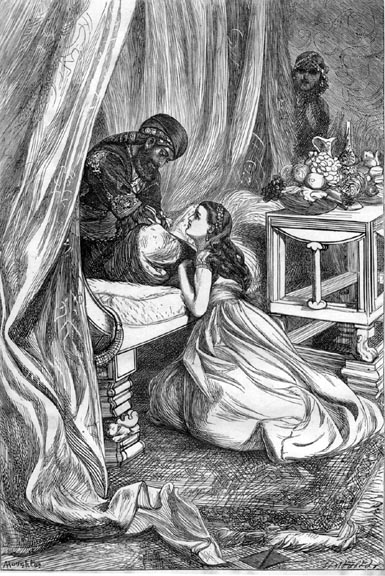
Shahrazad has the talent. Dunyazad has the question. Without the question, the thousand nights would never have begun.
It's worth adding that even the "thousand" is a courtesy: in the tradition from which the title comes, it indicates an innumerable quantity, not a count, and the stories actually contained in the manuscripts are far fewer. This is good news for anyone who wants to reclaim that name today without having to commit to delivering one thousand and one pieces.
One Thousand and One Tales
Dunyazad is a collection of short stories, and together it’s the sister who asks.
The rule is a single one, and it’s strict: every story is complete. It has a beginning and an end, can be read in one breath, and when it ends, it's finished. No "to be continued next time", no chapters to recover, no obligation to remember anything. Whoever gets off at their stop has read a complete story, not a piece of a story.
Then the question arrives. Once a story is closed, Dunyazad proposes another — and not by chance. It can be a new adventure for the character you’ve grown fond of. It can be another story set in the country where you felt comfortable. Or it can simply be a tale with the atmosphere needed tonight. Two readers starting from the same story end up in two different places, and that's exactly the point.
The thread that holds
One story is linked to the previous one by a person, a place, a moment in time — and sometimes by an idea, which is the most surprising link, because it holds together stories that have nothing else in common. A provincial factory in 1991, a witch on a Ligurian cliff, a village on a planet with two suns: and in all three, the same gesture, someone doing something good secretly and not telling anyone.
These aren’t recurrences to collect. They are doors. No one warns you when you're crossing one: you recognize it, and that’s enough.
The mycelium
In a forest, what you see are mushrooms. What holds the forest together is the mycelium: the thin network underground that nobody ever looks at.
For those who write, Dunyazad is a place to graft onto down there. A story published elsewhere lives only once: someone reads it, and that’s the end of it. Here, the people, places, objects and ideas it contains become roads. A reader following something completely different — a country, a trade, an obsession — comes across your pages because you share something in common, and arrives months after you wrote it. A three-year-old story continues to receive new readers, brought by stories that didn’t even exist when you finished writing it.
And it works both ways. You can build a territory all your own, with your characters moving between your stories; or graft onto what already exists and borrow someone, asking permission from whoever invented them. The two things aren't mutually exclusive: the roots are the same.
The convent where dreams are ordered
There’s an image that has stayed with us: a convent where, at night, everyone’s dreams arrive. The monks don’t judge them — they arrange them. Each one finds its place according to the light it emits: some shine immediately, others only if you put them next to the right one, and certain ones remain unlit for years until someone brings the dream that ignites them.
In the convent, two professions are practiced.
The first is that of the librarian, and they are unseen. They don't write; they build and administer the structures that support the stories. Every person, place, object or idea has a stable identity that never changes — two Margheritas remain two Margheritas even a thousand stories apart. Every connection has weight, because appearing in a scene isn’t the same as holding up a story. And every tale rests on a unique timeline, the same for an August in the countryside and for a planet with its own calendar, so that "before" and "after" mean something. It's work that only goes noticed when it's missing, because then stories return to being just a pile.
The second is that of the scholar, and it’s not done by a machine. They read, and see what the librarian cannot: whether a story stands up, where it casts a shadow, what light it sends out, next to which other one it should be placed so they illuminate each other. One librarian is enough. Scholars? Never enough.
The scroll is open: a thousand and one stories, one at a time.
Go to dunyazad.org
Have feedback? Write to us
This message is for our eyes only. We may publish your comment at the end of the article if it’s interesting, but only after reviewing it.
As you type, your browser is solving a small calculation – our way of keeping out automated submissions without using third-party services or asking you to identify traffic lights. Nothing is requested of you and no data leaves this site.