The Shape of Hours
Automatically translated from Italian · see original
A small praise of duration
There is a precise hour, at the end of August, when the light rests on the walls as if it were thinking. It is no longer the high sun of the morning, nor is it the warm gold of the evening: it is that mid-afternoon suspension that in the south we call *controra* [counter-hour], when the streets empty and the town seems to have agreed to slow down together.
In this interval I sit on the balcony with a glass of almond milk and watch time pass. I use the wrong verb: time doesn't pass, it comes. It arrives, stops for a moment to be observed, then continues. It is I who let it go.
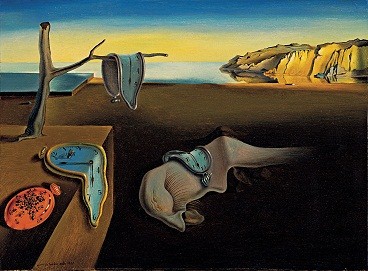
I read somewhere — perhaps it was an interview with a Russian composer, perhaps it was a dream — that every gesture performed with attention changes duration. Two minutes spent carefully pouring coffee are not the same two minutes spent waiting for a traffic light. Time has a consistency: sometimes it is rough, sometimes smooth, sometimes it is so slow that it seems like honey dripping from a spoon.
I wonder if it is possible to design it. Not to stop it — photographers do that, and they pay the price — but to shape it, as one shapes wood. To take any hour and work it until it has the form we want.
I think of silent workshops, secluded laboratories where machines learn to move with the grace of a calligrapher. A repeated movement with the patience of someone who is never in a hurry: automation, certainly, but no less beautiful for it. Indeed, perhaps even more beautiful, because it never tires. An expert craftsman traces a perfect curve; a craftsman who teaches that curve to a mechanism makes it trace it a thousand times, ten thousand times, identically, and each time it seems like the first.
This, I believe, is the most subtle dream: that beauty can be repeated without being lost. That an elegant act, once understood, becomes perennial.
Ancient philosophers said that idleness is the father of contemplation. Today, idleness frightens us; we fill it with notifications like a tank leaking from the bottom. But there is another possibility, less known and more refined: to let the things around us take care of flowing, while we remain still to watch.
Everything that is beautiful slows down those who observe it. A fresco, a well-written sentence, the profile of a boat returning to port in backlight. They are devices to take time away from us, piece by piece, without us realizing it.
The time for wasted time is over. From the alleyway rises the smell of someone else's dinner, the shutters begin to flap again, the light shifts half a meter on the wall. I look at the empty glass and realize I haven't done anything useful for two hours. I also realize I've never been so rested.
Perhaps dreams aren't meant to escape time. They're meant to teach us that time, if one has patience, can be shaped.
Have feedback? Write to us
This message is for our eyes only. We may publish your comment at the end of the article if it’s interesting, but only after reviewing it.
As you type, your browser is solving a small calculation – our way of keeping out automated submissions without using third-party services or asking you to identify traffic lights. Nothing is requested of you and no data leaves this site.